Aspen Ski Season: What Actually Happens When Sugar Arrangements Hit the Slopes
Victoria
February 06, 2026No comments
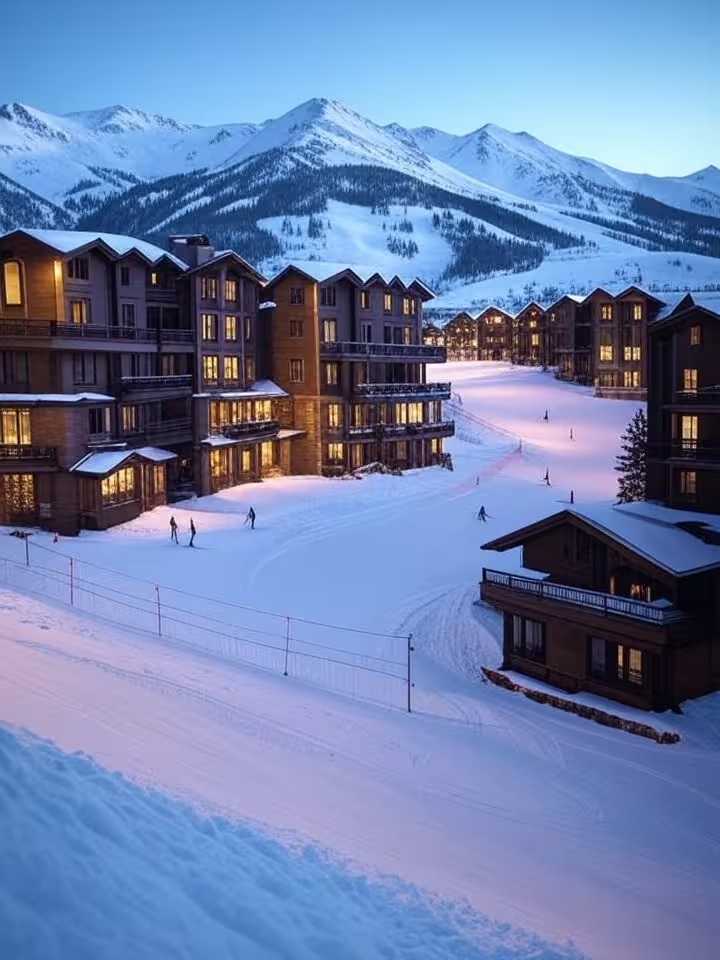
That was winter 2017. Since then, I’ve done five Aspen seasons with different arrangements, watched countless others navigate this scene, and here’s what nobody tells you: Aspen ski season isn’t just another luxury destination for sugar dating—it’s a completely different operating system. The altitude does weird things to people. The wealth concentration is insane even by sugar dating standards. And the social dynamics? They’ll either fast-track your arrangement into something genuinely meaningful or expose every crack in your foundation within 72 hours.
So if you’re heading to Aspen this season—whether it’s your first time or your fifth—here’s what actually happens when sugar arrangements hit these particular slopes, and what you need to know to make it work.
Why Aspen Hits Different Than Every Other Sugar Destination
I’ve done Miami Art Week, Vegas during major fights, even Fashion Week in New York. Aspen’s luxury sugar scene operates on its own rules, and understanding this saves you from expensive mistakes.
The wealth density here is genuinely overwhelming if you’re not prepared for it. During peak season (Christmas through Presidents’ Day weekend), you’ve got billionaires who make your successful SD look middle-class. I remember sitting at Ajax Tavern one February afternoon when a guy casually mentioned he’d flown in that morning from Dubai just for lunch at Element 47 and was heading to his Kauai place for dinner. His plane was literally waiting at the private terminal.
What this means for your arrangement: the comparison game gets real. If your SD is genuinely wealthy but not private-jet-to-three-continents-in-one-day wealthy, Aspen can trigger insecurity on both sides. I’ve watched arrangements implode because a baby started obviously comparing her daddy to the next level up, or because a SD felt inadequate around the truly elite crowd.
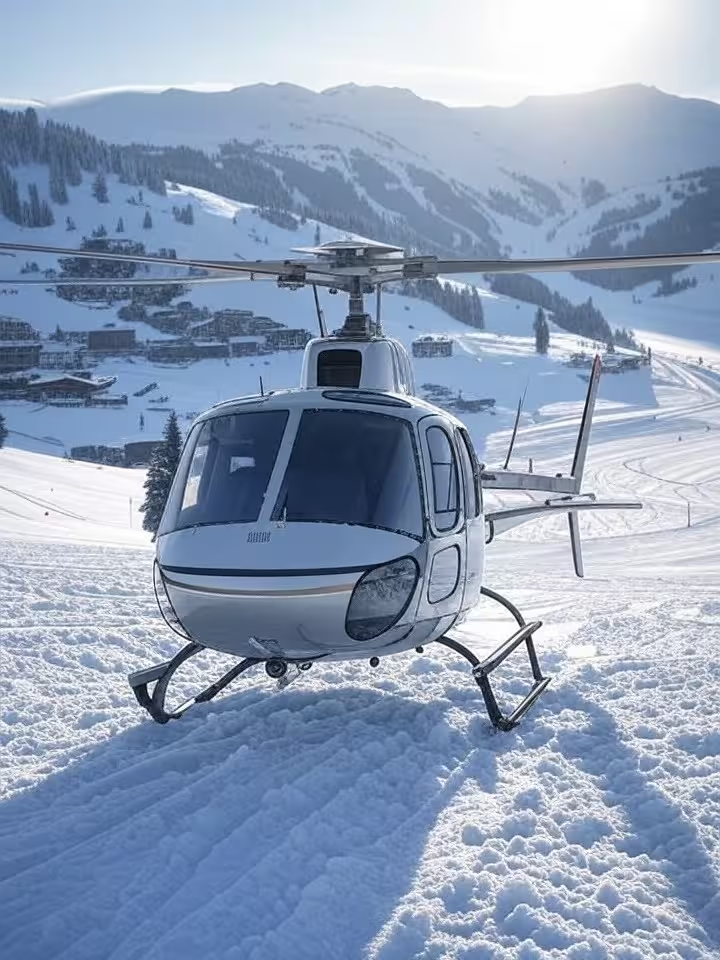
Here’s what I learned works: acknowledge the wealth stratosphere openly. During my third Aspen season with a tech investor from Seattle, we had this conversation over breakfast at White House Tavern. He was successful but not billionaire-level, and he’d noticed me tracking the helicopter landings at the St. Regis. Instead of letting it fester, he said straight up: “I can’t compete with that tier, but what I can offer is genuine presence and this entire week focused on us.” That honesty? It reset my expectations and made the trip infinitely better.
The Altitude Factor Nobody Warns You About
This sounds mundane but trust me—the 8,000-foot elevation does things to arrangements that catch everyone off guard.
Physically, you’re dealing with altitude sickness, dehydration, and alcohol hitting three times harder than at sea level. That champagne at Cloud Nine that seems like a perfect après-ski moment? It’ll have you lightheaded and possibly nauseous within an hour if you’re not careful.
But here’s the part that actually matters for your arrangement: altitude affects everything. Your sleep gets disrupted. You’re more irritable. Things that wouldn’t bother you at sea level suddenly feel like major issues. And if you’re not prepared, this can tank the entire trip.
My second Aspen season, I was with a finance guy from New York. Both of us underestimated the altitude. By day three, we were both exhausted, snapping at each other over tiny things, and the romantic ski getaway felt more like a forced march. We salvaged it by finally admitting we needed a full rest day—no activities, just sleeping in, gentle walks, hydration, and early nights.
According to research on altitude’s effects on mood and cognition, even moderate elevation can impact emotional regulation and decision-making, which explains why small arrangement tensions get amplified up here.
What actually works: arrive two days before any major activities. Hydrate obsessively (I’m talking a liter of water every few hours). Limit alcohol drastically the first 48 hours. Build in rest time daily. This isn’t sexy advice, but it’s what separates arrangements that thrive here from ones that crash and burn.
The Real Social Dynamics of Aspen’s Sugar Scene
The social landscape during ski season operates on unwritten rules you need to understand fast.
First, discretion works completely differently here than in cities like Seattle or even New York. Aspen’s small (the town is literally less than seven square miles), and the high-end scene is incredibly interconnected. You will run into the same people multiple times. At Ajax Tavern for lunch, at Matsuhisa for dinner, at the Little Nell bar after skiing, at Kemo Saba for late-night drinks.
I learned this the hard way my first season. My SD at the time was semi-well-known in tech circles, and we ran into his business associate at CP Burger on night two. It was awkward because we hadn’t discussed how to handle these encounters. Do we acknowledge the arrangement dynamic? Pretend we’re just friends? I fumbled through an introduction that satisfied nobody.
What I do now: have the “how do we handle social encounters” conversation before arriving. Decide on your story. Some arrangements I’ve done, we were open about the dynamic with anyone who mattered. Others, we positioned it as “dating and seeing where it goes.” Neither approach is wrong, but you need alignment.
Script that’s worked for me: “So we’re definitely going to run into people you know here. What’s your comfort level with how we present this? I can be your friend, your date, or we can be upfront about the arrangement—whatever works for you, but let’s decide now so we’re not awkward in the moment.”
Second, the baby competition is intense in ways other destinations aren’t. Aspen during peak season has an unusually high concentration of beautiful, polished women—many in arrangements, some looking to start them, others just in that world adjacent to sugar dating. The grooming standards are insane. I’ve watched women show up to casual après-ski in full hair and makeup that would be over-the-top for a nice dinner elsewhere.
This creates pressure. If you’re a baby, you’ll feel it. If you’re an SD, you’ll notice your companion feeling it, which affects the dynamic.
What’s worked for me: acknowledge it openly and then consciously opt out of that game. During my fourth season here, with a real estate investor from LA, I said over coffee at Jour de Fete: “There are going to be women here who are more polished, better skiers, whatever. But you asked me here, and I’m choosing to focus on what makes our connection specific rather than trying to compete with the entire mountain.”
He later told me that moment of vulnerability and confidence was when the arrangement shifted into something deeper for him. Because here’s the thing: most successful SDs in Aspen aren’t actually looking for the most conventionally perfect woman in the room. They’re looking for genuine connection in a scene that’s often performative as hell.
The Activities That Actually Build Connection (And The Ones That Expose Problems)
Not all Aspen activities are created equal for arrangements. Some naturally facilitate bonding; others will show you every incompatibility in your dynamic.
What actually works for building connection:
Private ski lessons together. Not separate lessons—together, with an instructor who teaches both of you. This worked surprisingly well during my third season. We were both intermediate skiers, and having a shared challenge where neither of us was expert created this collaborative energy. We laughed at our mistakes, celebrated small improvements, and the physicality of skiing together was honestly intimate in ways I hadn’t expected.
Sunset snowmobile tours to the backcountry. Several outfitters do private sunset trips to mountaintop venues like the Sundeck. You’re bundled up, moving through beautiful landscape, and it creates natural conversation moments without the pressure of constant face-to-face interaction. Plus, arriving somewhere stunning for a private dinner after the journey builds this sense of shared adventure.
Cooking classes at some of the high-end private venues. I did this once at a private chalet with a personal chef. It sounds cheesy, but working together to prepare a meal, with wine flowing and low pressure, facilitated hours of genuine conversation that fancy dinners sometimes don’t allow for.
What tends to expose problems:
High-stakes skiing if you’re mismatched in ability. I watched an arrangement disintegrate on Ajax because he was an aggressive expert skier and she was a nervous intermediate. He grew frustrated at the slow pace; she felt pressured and unsafe. The resentment poisoned everything else. If you’re doing challenging terrain, your skill levels need to be genuinely compatible.
Large group social events where you don’t know anyone. The Aspen Institute events, certain charity functions—if you’re attending as a couple but he’s working the room and you’re left to small-talk with strangers, it highlights the transactional nature in uncomfortable ways. Not saying don’t go, but be strategic about which events and make sure there’s a plan for you to feel included.
Packed itineraries with no downtime. The biggest killer. I’ve done trips where we scheduled something every few hours—breakfast at Pyramid Bistro, morning skiing, lunch at Bonnie’s, afternoon spa, cocktails at the J-Bar, dinner at Element 47, nightcap at Escobar. Sounds perfect, right? But you never actually connect. You’re just moving through activities. The arrangements that deepened here always had significant unstructured time built in.
What Red Flags Look Different at Altitude
Certain warning signs manifest uniquely in Aspen’s environment, and catching them early matters.
If he’s constantly on his phone apologizing about work: Look, I get it—successful men have demanding careers. But in Aspen, during a planned luxury getaway, excessive work intrusion often signals something else. Either he’s not actually that into the arrangement and using work as an avoidance mechanism, or his life is genuinely too chaotic for what you’re looking for.
I had this happen my second season. Constant calls, emails during dinner, cutting activities short. When I finally addressed it, his response was defensive rather than apologetic. That arrangement ended within a month because the pattern continued—Aspen just made it obvious faster.
If she’s clearly performing for other people’s attention rather than being present with you: The Instagram-everything mentality, angling for photos that exclude you, networking aggressively with other men at social venues. Some level of social media is normal, but if the entire trip feels like content creation or fishing for upgrades, you’re in a fundamentally transactional dynamic that won’t satisfy either of you long-term.
If either of you is constantly comparing the arrangement to others around you: “Did you see they’re staying at the St. Regis residences?” “That guy just ordered a $5,000 bottle at Matsuhisa.” Comparison is poison in arrangements generally, but Aspen’s wealth concentration makes it lethal. If you can’t both settle into appreciation for what you specifically have together, the destination will corrode rather than enhance things.
The Conversations You Need to Have Before Arriving
Based on five seasons doing this, here are the specific discussions that prevent Aspen-related arrangement problems:
Budget transparency. Aspen is expensive in ways that shock even wealthy people. Lift tickets alone are $200+ per day. Dinners at top restaurants easily hit $500-800 for two. If you’re the SD, be clear about what you’re comfortable spending without resentment. If you’re the SB, understand the budget so you’re not constantly suggesting things outside it or feeling disappointed.
My best Aspen experience included this conversation: “I’ve budgeted $X for the week not counting lodging, which I’ve already handled. Within that, let’s prioritize what matters most to both of us. I’d rather do fewer things well than try to do everything and stress about cost.”
Intimacy expectations. The romantic mountain setting can create pressure or assumptions. Be explicit. How much couple time versus independent time? What does physical intimacy look like during the trip? Better to over-communicate than assume.
Social media boundaries. Can she post? If so, can you be in photos or is it landscape shots only? This matters more in Aspen because the backdrop is so distinctive—a photo at Cloud Nine immediately identifies location.
Activity preferences and deal-breakers. If he’s envisioning hardcore double-black-diamond skiing and she’s terrified of anything steeper than a bunny slope, that’s a problem. If she’s imagining après-ski shopping at Kemo Saba and Gorsuch and he finds shopping torture, that’s a problem. Surface this early.
Relationship researcher John Gottman’s work on successful couples consistently shows that relationships thrive when there are five positive interactions for every negative one—in the intense proximity of a ski vacation, managing expectations upfront helps maintain that ratio.
The Lodging Decision That Actually Matters
Where you stay in Aspen significantly impacts your arrangement’s dynamic, and it’s not just about luxury level.
I’ve stayed at the Little Nell (twice), St. Regis, The Limelight, various private homes through arrangements, and once at a more modest place in Snowmass. Each created different relationship dynamics.
The Little Nell is peak Aspen—ski-in/ski-out, impeccable service, you’re in the center of everything. It’s perfect if you want to be immersed in the scene. But privacy is limited—you will encounter other guests constantly, the bar is a social hub, and there’s a performance element to being there. Great if you’re comfortable being visible as a couple; potentially uncomfortable if discretion matters.
Private homes (rented through Aspen Luxury Rentals or similar) offer completely different energy. You have space to actually be yourselves without audience. You can make breakfast together, have genuine downtime, not worry about running into people in the lobby. The tradeoff is you’re more isolated from the social scene and lose some of the full-service luxury hotel experience.
My favorite arrangement trip here was in a private four-bedroom chalet in the West End. Just the two of us in this beautiful space, personal chef came twice, but otherwise we controlled our environment completely. We skiied when we wanted, stayed in when we didn’t, and the privacy allowed the relationship to deepen in ways hotels don’t facilitate.
What to consider: How much do you want to be part of Aspen’s social scene versus creating your own private experience? How important is full-service luxury versus space and privacy? What’s your comfort level being visible as a couple?
There’s no wrong answer, but misalignment on this ruins trips. If he books the Little Nell expecting vibrant social engagement and she was hoping for private couple time, or vice versa, you’re starting from friction.
The Money Conversation Nobody Has (But Should)
Let’s talk about financial dynamics specifically in Aspen context, because they operate differently than other destinations.
For SDs: Aspen can trigger expensive one-upmanship if you’re not careful. You see other men casually spending at levels that might stretch your budget, and there’s pressure to keep pace. I’ve watched SDs overspend to the point of resentment because they felt they had to match the scene around them.
Here’s what the secure, successful SDs I’ve known do: they set their budget based on their actual comfort level, not the top end of what Aspen offers. They focus on experiences that matter to both people rather than performative luxury. And they’re upfront about it.
One of my favorite arrangements here, the guy said early on: “I’m going to be real with you—I can’t compete with some of the wealth you’ll see here. What I can do is give us an amazing week within my comfortable range, and I’d rather do that with zero resentment than overspend and feel weird about it. Is that okay with you?”
That honesty was incredibly attractive. It showed security and self-awareness. And it let me recalibrate my expectations to appreciate what we had rather than focusing on what we didn’t.
For SBs: There’s temptation to angle for upgrades or extras when you see the wealth concentration here. But here’s what I learned—arrangements that last are built on consistent mutual satisfaction, not maximizing short-term gains.
If your SD has brought you to Aspen, put you up somewhere nice, and is treating you well within his genuine capacity, appreciate that rather than constantly pushing for more because you see higher levels around you. The babies who do well long-term in this world understand the difference between healthy advocacy for themselves and counterproductive greed.
That said, if he’s genuinely wealthy and being inappropriately cheap given his actual resources, that’s different. But distinguish between “he’s not spending like the billionaire at the next table” and “he’s being stingy relative to his actual means.” The first is okay; the second is a red flag.
When Aspen Reveals Your Arrangement Won’t Work
Sometimes these trips expose fundamental incompatibilities, and that’s actually valuable information.
If you get to Aspen and discover you have completely different ideas about what constitutes a good time, and neither is willing to compromise—that’s data. If the altitude and proximity make you realize you don’t actually enjoy spending extended time together—that’s data. If the wealth and social dynamics trigger insecurity or resentment that can’t be resolved through conversation—that’s data.
I had an arrangement end during an Aspen trip. Third day in, we both realized we’d been performing compatibility that wasn’t actually there. The concentrated time together, away from our normal routines, made it obvious. We had a mature conversation about it, enjoyed the rest of the trip as friends, and ended things amicably when we got back.
It felt like failure in the moment, but it wasn’t—it was efficient truth-finding. Better to learn incompatibility during one Aspen trip than six more months of increasingly unsatisfying arrangement.
The arrangements that thrive past Aspen are the ones where the trip deepens what you already had rather than exposing its shallowness. You come back from the mountain with more inside jokes, better understanding of each other’s rhythms, and renewed appreciation for what you’re building together.
What I Wish I’d Known My First Season
If I could go back and talk to myself before that first Aspen trip—the one where I twisted my ankle and felt completely out of my depth—here’s what I’d say:
The luxury isn’t the point. I was so focused on the opulent setting that I missed opportunities for genuine connection. The arrangements that worked here were the ones where we used Aspen as a backdrop for getting to know each other, not as the main event.
Slow down. Every trip I over-scheduled was worse than the ones with space built in. You don’t need to hit every famous restaurant and do every activity. Sometimes the best night is wine and conversation in your rental, or a casual breakfast at Meat & Cheese followed by an easy ski morning and afternoon nap.
Your arrangement doesn’t need to look like anyone else’s. Comparison will destroy what could otherwise be great. If you’re staying at The Limelight while others are at the St. Regis, but you’re genuinely happy with your SD and what he provides—own that. If you’re with a man who isn’t the wealthiest in the room but treats you with consistent respect and generosity—that matters more.
Altitude affects everything. Seriously, I can’t stress this enough. Hydrate, rest, don’t overdo alcohol, and give yourself adjustment time. So many arrangement problems here trace back to physical misery that people try to push through.
Have the hard conversations before you arrive. Budget, expectations, social media, activities, intimacy, discretion—all of it. Over-communicate. The arrangements that flow smoothly here are the ones with clear understandings established early.
Look, Aspen ski season can be magical for sugar arrangements—I’ve had some of my best bowl experiences on these mountains. But it requires intentionality, communication, and realistic expectations from both people.
If you’re heading there this season, go in with eyes open. Appreciate the extraordinary privilege of being there, but don’t let the setting distract from what actually matters: whether you and this person genuinely enjoy each other’s company, treat each other well, and are building something mutually satisfying.
Because at the end of the day, that’s what makes any arrangement work—whether you’re at 8,000 feet in Aspen or anywhere else.
To provide the best experiences, we use technologies like cookies to store and/or access device information. Consenting to these technologies will allow us to process data such as browsing behavior or unique IDs on this site. Not consenting or withdrawing consent, may adversely affect certain features and functions.
Functional
Always active
The technical storage or access is strictly necessary for the legitimate purpose of enabling the use of a specific service explicitly requested by the subscriber or user, or for the sole purpose of carrying out the transmission of a communication over an electronic communications network.
Preferences
The technical storage or access is necessary for the legitimate purpose of storing preferences that are not requested by the subscriber or user.
Statistics
The technical storage or access that is used exclusively for statistical purposes.The technical storage or access that is used exclusively for anonymous statistical purposes. Without a subpoena, voluntary compliance on the part of your Internet Service Provider, or additional records from a third party, information stored or retrieved for this purpose alone cannot usually be used to identify you.
Marketing
The technical storage or access is required to create user profiles to send advertising, or to track the user on a website or across several websites for similar marketing purposes.