Napa Harvest Season: What Wine Country Actually Does to Sugar Arrangements (From Someone Who’s Done It Wrong and Right)
Victoria
May 09, 2026No comments
Look, I’m not going to pretend I planned my first Napa trip during harvest season with any strategy whatsoever. I was three months into an arrangement with a tech executive from San Francisco, and when he suggested “a weekend in wine country during crush,” I said yes because—honestly—I had no idea what “crush” even meant. I just knew it sounded expensive and romantic, and I was 24 and operating on vibes.
That trip taught me more about what actually makes or breaks arrangements in high-stakes settings than any amount of messaging ever could.
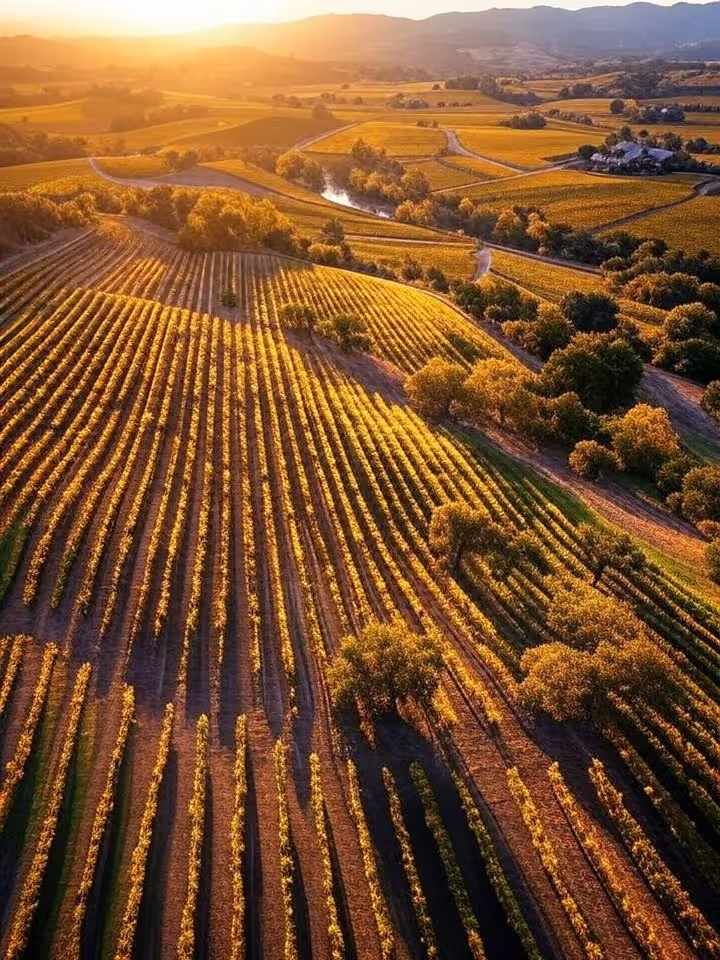
Because here’s what nobody tells you about wine country during harvest: it’s not just pretty. It’s intense. The entire valley operates on this pulsing energy—winemakers are stressed, restaurants are packed, hotel rates triple, and there’s this unspoken expectation that everyone should be having the time of their lives. Which means if your arrangement has any cracks? Napa during harvest will find them.
So yeah, we need to talk about what actually happens when you take a sugar arrangement into this specific environment. Not the Instagram version—the real one, where I’ve seen connections deepen beautifully and also watched them implode over a $400 wine pairing.
Why Harvest Season Isn’t Just Another Weekend Getaway
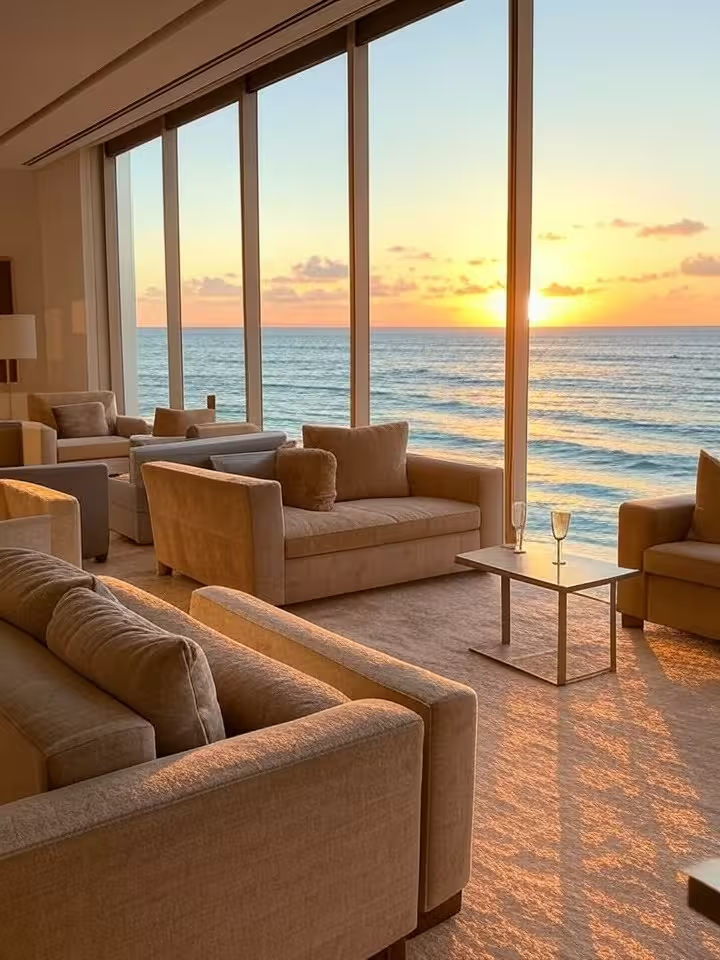
That first trip? We stayed at Auberge du Soleil—which, if you don’t know, is basically where San Francisco money goes to pretend they’re in Provence. Gorgeous property, incredible views, the kind of place where breakfast costs more than my college textbooks.
And I completely missed the point.
I thought the trip was about the experience itself—the tastings, the dinners, the luxury. What I didn’t understand was that wine country arrangements during harvest function as this weird relationship pressure test. You’re together for 48-72 hours straight, mostly sober (wine tastings don’t actually get you drunk if you’re doing them right), in beautiful but isolated settings where you can’t hide behind the usual arrangement buffers.
No rushing off to separate apartments. No “I have an early meeting” excuses. Just you, him, rolling vineyards, and whatever conversational depth you’ve actually built.
Which sounds romantic until you realize you’ve been seeing each other twice a month for three months and you know his favorite scotch but not his middle name.
The harvest timing specifically matters because:
Everyone around you is obsessed with process and payoff. Winemakers talk endlessly about how this year’s growing season affected the grapes, what decisions they made, whether it’ll pay off. You start unconsciously applying that same analysis to your arrangement. What are we actually building here? Is this going anywhere? What’s the vintage going to be?
The entire valley operates on delayed gratification. You taste wines that won’t be bottled for years. You hear about vineyard investments that take a decade to mature. It makes you think about your own timeline differently—suddenly six months doesn’t seem like “a long arrangement,” it seems like you’re barely out of the ground.
There’s genuine work happening all around you. Harvest crews start at dawn. Winemakers pull all-nighters during crush. It creates this subtle cognitive dissonance when you’re drinking a $200 bottle at lunch—you’re very aware that someone is working extremely hard while you’re… not. Which can make sugar babies feel weird about the dynamic, and make sugar daddies hyper-aware of what they’re providing.
What Actually Happens During a Harvest Weekend (The Real Breakdown)
Let me walk you through what a well-executed Napa harvest trip actually looks like, because I’ve now done this enough times to know the difference between arrangements that use it well and ones that crash and burn.
Day One: Arrival and Recalibration
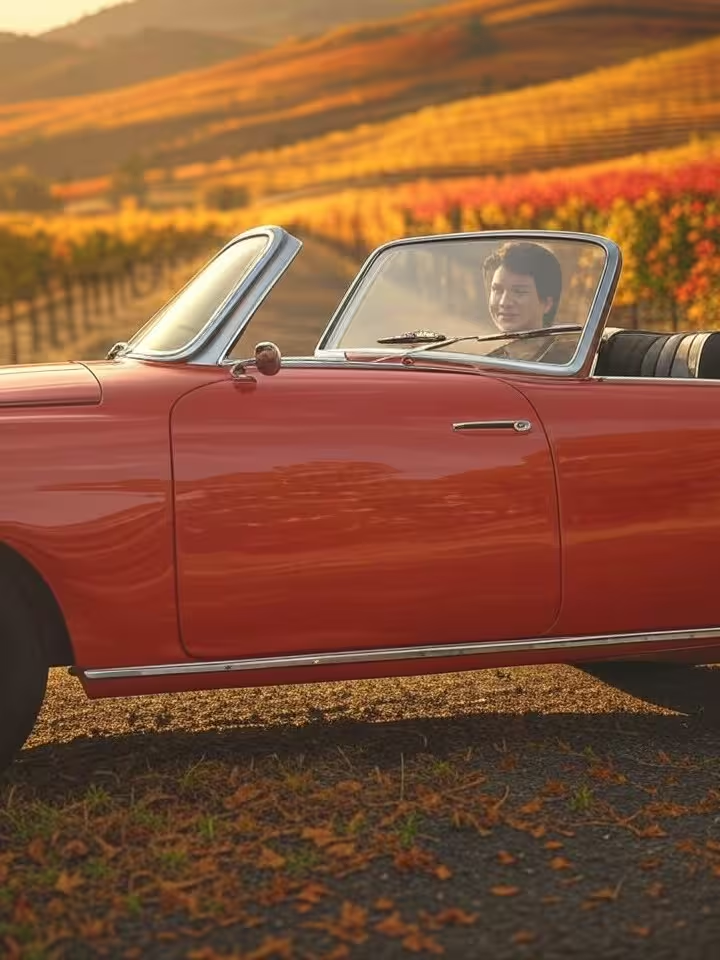
The drive up from San Francisco takes about 90 minutes, depending on traffic. If he’s driving, this is actually your first test—can you handle unstructured conversation for an hour and a half? I’ve learned to bring a playlist (ask him what he wants to hear, don’t just assume), have a few conversation topics prepped (current events, something funny that happened recently, a question about his work that shows you actually listen), and be comfortable with some silence.
Silence during that drive isn’t awkward if you’re secure. It’s only weird if you’re performing.
You’ll likely arrive mid-afternoon. Here’s what I actually do at check-in while he’s handling logistics: I tip the bellman directly (your own $20, not his) and I ask about restaurant reservations for him—”He mentioned wanting to try [restaurant], is that something you can help arrange?” This positions you as thoughtful and proactive, not just along for the ride.
First evening is usually a winery dinner or a nice restaurant. During harvest, places like The Restaurant at Meadowood or SingleThread (if you go up to Healdsburg) do special crush menus. This dinner sets the tone for the entire weekend.
What I’ve learned: Don’t perform wine knowledge you don’t have. If you don’t know the difference between Right Bank and Left Bank Bordeaux, don’t pretend. Ask questions. Say “I’m still learning about wine, what should I be noticing here?” Quality men find genuine curiosity way more attractive than fake expertise.
Also—and this is crucial—put your phone away. Not on the table. Away. Harvest dinners are long, multi-course affairs. If you’re checking Instagram between courses, you’re telling him this experience isn’t enough for you.
Day Two: The Actual Wine Country Experience
This is typically the core day—vineyard visits, tastings, maybe a hot air balloon ride if he’s into that kind of thing (I’m personally terrified of them, but I’ve done it). Here’s what actually matters:
Morning timing is important. If you sleep until 10am and then need an hour to get ready, you’ve just cut the day in half and signaled that your comfort matters more than shared experience. I’m not saying roll out of bed—but be ready when he is, or earlier. Order room service breakfast for both of you as a surprise. Show that you’re invested in maximizing the day.
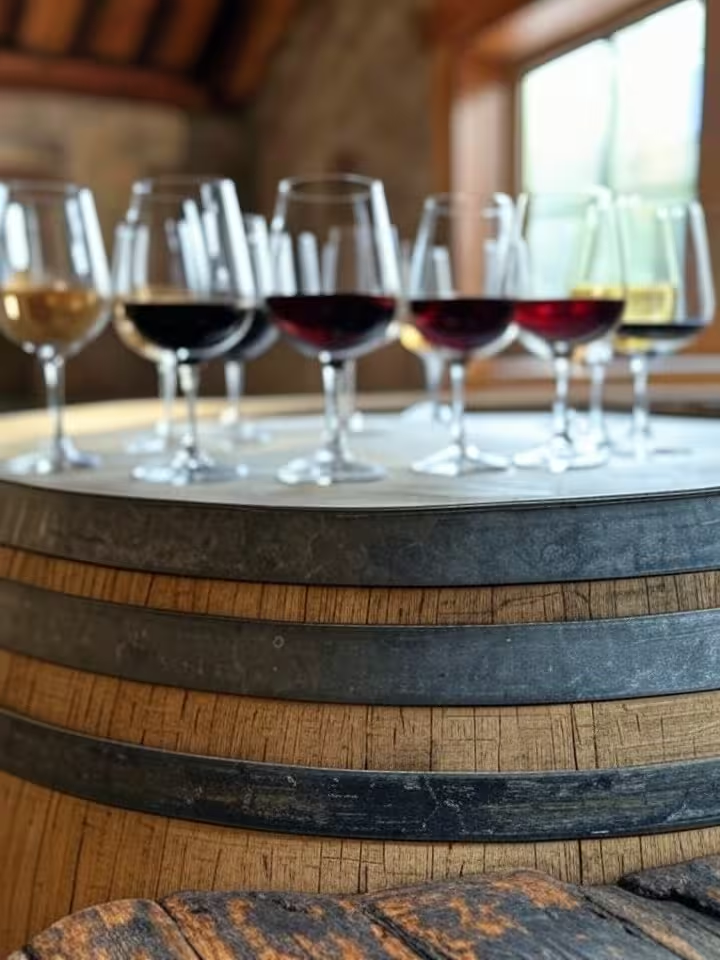
Tasting room dynamics: I’ve made this mistake—treating tastings like a girls’ trip, getting giggly and loud, focusing more on photos than conversation. What actually works is engaging with him about what you’re experiencing. “This one’s so different from the last—do you taste that?” or “Which one’s your favorite so far?” Make it a shared discovery, not a parallel activity.
The question everyone asks: Do you spit or swallow at tastings? (The wine, calm down.) Honestly? Follow his lead. If he’s spitting, you should too—it shows you understand this is about education, not getting drunk. If he’s swallowing, match that. The point is to be in sync.
Lunch is usually at a winery restaurant or somewhere like Farmstead at Long Meadow Ranch. This is actually where I’ve had some of the best arrangement conversations—there’s something about being slightly wine-buzzed in beautiful surroundings that makes people more honest. Quality arrangements use these moments to talk about things that matter: what you both want from the next few months, whether the dynamic is working, plans beyond just the next date.
Afternoon is typically more low-key—maybe a spa treatment, pool time at the hotel, or a scenic drive. This is where you show you can exist together without constant stimulation. Can you read a book by the pool while he takes work calls? Can you enjoy a couple’s massage without making it weird? Can you appreciate a beautiful view without needing to document it?
Second evening: Usually the fancy dinner. During harvest, places like The French Laundry or Bouchon are booked months out (he should have handled this reservation before the trip, by the way—if he didn’t, that tells you something about his planning). Dress well. The effort you put into your appearance for this dinner communicates respect for the experience and for him.
Day Three: The Goodbye Calibration
Morning is usually slower—late breakfast, maybe one more quick tasting if you’re both up for it, then the drive back. This is actually the most important part of the trip.
Because by now, you both know whether this worked or didn’t. You’ve spent 48+ hours together in close proximity. You’ve seen how he handles stress (service issues, crowds, changing plans) and how you handle luxury (with gratitude or entitlement). You’ve had conversations that went deeper or stayed surface-level.
The drive back is when you either:
A) Naturally talk about the next time you’ll see each other, upcoming plans, how great the weekend was—that’s a successful trip. B) Make polite conversation and avoid discussing the future—that’s an arrangement that probably won’t survive another month.
I can always tell which one it is by mile marker 30 on Highway 29.
The Mistakes I’ve Made (So You Don’t Have To)
Look, I’m going to be real about where I’ve screwed this up, because I think it’s more useful than just telling you what to do right.
Mistake #1: Treating it like a girls’ trip with a bankroll
My second Napa harvest trip, different arrangement, I brought this energy like I was there with my girlfriends and he just happened to be funding it. Lots of selfies, excited squealing about how pretty everything was, asking if we could stop at every cute tasting room we passed.
He got quiet by Saturday afternoon. That evening at dinner—we were at Bottega in Yountville—he said something I’ve never forgotten: “I’m happy you’re enjoying yourself, but I feel like I’m watching you have an experience rather than having one with you.”
Ouch. But fair.
The fix: Make him part of the experience, not the funding mechanism for your experience. Ask his opinions. Share observations with him first, social media second (or not at all). Make eye contact more than you make content.
Mistake #2: Not managing energy levels
Wine country days are long. Tastings, big meals, walking through vineyards, more tastings, another big meal. I’m someone who needs downtime to recharge, but I didn’t communicate that—I just got quieter and snippier as the day went on.
By Sunday morning of one trip, I was so socially exhausted that I couldn’t hide it. He asked if I was okay, I said “fine” (classic mistake), and we drove home in uncomfortable silence.
The fix: If you need a break, say so. “I’m having an amazing time, but I think I need an hour to recharge—would you mind if I took a bath while you [made calls/read/whatever]?” Every quality man I’ve dated appreciated this honesty way more than watching me fade.
Mistake #3: Assuming luxury equals satisfaction
The nicest Napa trip I ever took was also the emptiest. We stayed at Calistoga Ranch, did private tastings at Screaming Eagle and Harlan, ate at every restaurant I’d ever heard of. On paper, it was perfect.
In reality, we barely talked about anything real. We performed “having an amazing time” but we didn’t actually connect. When he dropped me off Sunday evening, we both knew it was probably over.
Because here’s what I learned: Luxury is the setting, not the substance. The substance is whether you can be real with each other, whether you laugh at the same things, whether silence feels comfortable or suffocating.
You can have that at a Holiday Inn, and you can miss it entirely at a $2000/night resort.
The fix: Use the beautiful setting to facilitate real conversation. Ask questions that matter. Share things that are true. Don’t let the luxury become a substitute for actual intimacy.
What Men Are Actually Thinking During These Trips
I’ve asked enough of my long-term arrangements about this to have a pretty clear picture of what’s actually going through his head during a wine country weekend. And it’s not what most sugar babies assume.
Most women think he’s evaluating: Is she pretty enough? Is she fun? Is she worth what I’m spending?
What he’s actually evaluating:
Can I relax around her? Quality men—the ones worth having arrangements with—work extremely hard. They’re stressed, over-scheduled, mentally exhausted. A wine country weekend is one of the few times they can actually decompress. If you bring drama, neediness, or require constant entertainment, you’re adding to his stress instead of relieving it.
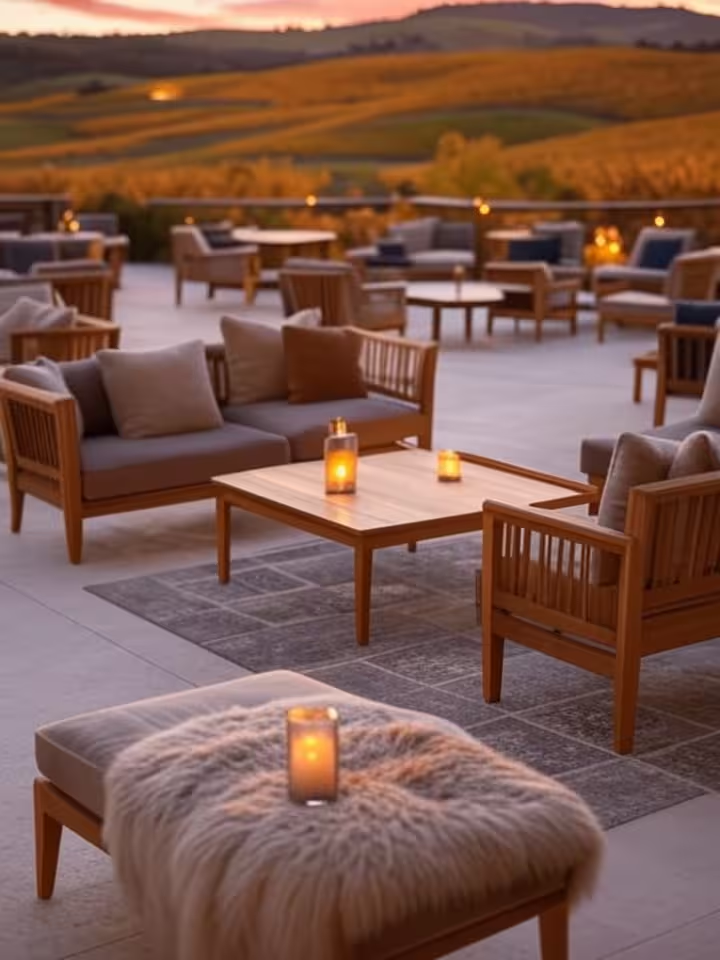
One SD told me: “The moment I realized Sarah was special was when we were sitting on the terrace at Meadowood, and she was perfectly content reading while I took a work call. She didn’t pout or get bored or make me feel guilty. She just… existed comfortably. That’s when I knew.”
Does she appreciate this, or expect it? There’s a massive difference between gratitude and entitlement. If you treat a $500 dinner like it’s the baseline, like of course this is happening, you’re communicating that his generosity is invisible to you.
Appreciation doesn’t mean fawning. It means: “This place is incredible, thank you for bringing me here.” It means putting your phone away. It means engaging fully with the experience he’s providing.
Can she handle my world? Harvest season in Napa is where his world goes. His colleagues go there. His clients go there. He’s not necessarily introducing you to them (discretion matters), but he’s observing: Could she fit into my life if we went further?
This means: appropriate dress, good table manners, ability to converse about topics beyond yourself, comfort in high-end settings without being overwhelmed or performative.
One of my arrangements told me he knew it wouldn’t work long-term when we ran into his business partner at Press in St. Helena, and I got visibly flustered and weird. “I needed someone who could handle unexpected moments with grace,” he said later. Fair.
Is this sustainable? Here’s the thing about wine country: it’s a forced intimacy preview. You’re getting a glimpse of what “more serious” would look like—travel together, unstructured time, navigating logistics as a unit.
He’s watching: Do you handle travel stress well? Are you flexible when plans change? Can you be low-maintenance when needed? Do you add to the experience or require constant management?
Because if the answer is no in this best-case scenario setting—beautiful location, incredible food, his full attention—then it’s definitely no in real life.
The Conversation Nobody Wants to Have (But We Need To)
Let’s talk about what happens when arrangement dynamics get tested in these settings, because I’ve seen both sides of this equation play out.
The intimacy expectation:
If you’ve been seeing someone for a few months and he suggests a wine country weekend, there’s an implicit expectation that this is a more intimate level of arrangement. Not necessarily physically (though often yes), but emotionally. This is not a first-date scenario.
What I’ve learned: If you’re not ready for that level of intimacy—whatever that means in your arrangement—don’t go. Don’t assume you can maintain strict boundaries in a romantic setting and have it not be weird. Don’t think you can keep things surface-level during 48 hours of close proximity.
I made this mistake once. Accepted a Napa trip from someone I’d seen maybe four times, all dinner dates. I wasn’t ready for the intensity, tried to maintain too much distance, and it was uncomfortable for both of us. He felt rejected, I felt pressured, and we ended things right after.
The financial dynamic:
Wine country trips are expensive. Even if you’re not staying at the ultra-luxury places, you’re looking at $300+ per person for dinners, $100-200 for tastings, $400-800/night for decent hotels. A weekend can easily run $3000-5000+ once you factor everything in.
Some sugar babies see this and think: Okay, so this counts as like three months of allowance.
That’s not how it works.
Experiences and allowance are different categories. Yes, he’s spending a lot—but that’s not a substitute for your regular arrangement unless you’ve explicitly agreed otherwise. This is where arrangements fall apart, when expectations aren’t aligned around what costs “count.”
What actually works: Clarifying this before the trip. “I’m so excited about Napa—just want to make sure we’re on the same page about our regular arrangement continuing as is?” It’s a slightly awkward conversation, but way less awkward than resentment building up.
The discretion question:
Napa is small. It’s wealthy. It’s the kind of place where everyone knows everyone. If discretion matters in your arrangement (and it usually does), you need to discuss this beforehand.
What does that mean practically? Maybe you’re introduced as a colleague, a friend, or nothing at all if you run into his acquaintances. Maybe you don’t post anything on social media that’s geotagged. Maybe you’re okay being affectionate in public or maybe you’re not.
I’ve had arrangements where we were very publicly couple-like in wine country because his divorce was final and he didn’t care who knew. I’ve had others where we maintained plausible deniability because his situation was more complicated. Neither is wrong, but you need to know which one you’re in before you get there.
The Wine Country Arrangements That Actually Last
So after all of this—the mistakes, the lessons, the awkward conversations—what actually makes a Napa harvest trip work for an arrangement?
The ones that succeed have a few things in common:
They happen at the right time. Not month one when you barely know each other. Not year three when you’re basically common-law married and wine country isn’t special anymore. But that sweet spot—6-18 months in, when you’re established but still have novelty, when intimacy feels natural but not obligatory.
Both people are clear on what it is. I’ve seen harvest weekends strengthen arrangements that were honest about being arrangements. I’ve seen them destroy arrangements where someone was hoping for more. The successful ones involve two people who both know this is: high-end companionship with genuine connection, but still within defined boundaries.
There’s actual compatibility beyond the arrangement structure. This is the hard truth: If you don’t actually enjoy each other’s company, wine country will expose that. You can’t hide behind monthly dinners and physical chemistry when you’re together for 48 hours straight. The arrangements that thrive through these trips are the ones where there’s real friendship underneath the sugar dynamic.
I think about my longest arrangement—we did Napa during harvest three years in a row. By the third year, we had favorite spots, inside jokes about certain wineries, a whole shared history in that valley. It worked because we genuinely liked each other. We weren’t in love, we weren’t going to end up together, but we liked each other. That’s what made it sustainable.
Someone plans the details. Usually him, but honestly, if you take initiative here it’s noticed. Research wineries that fit his taste. Make a reservation at that impossible-to-get restaurant. Suggest a hot air balloon ride or a couples massage. Showing that you invested mental energy into making the trip special—not just showing up to enjoy what he planned—changes the entire dynamic.
One of my SDs told me years later: “You sent me that email with the full itinerary you’d researched—all I had to do was book it. That’s when I knew you were different.” (For context: I’d spent like two hours researching Napa wineries that specialized in the Bordeaux varietals I knew he loved. It wasn’t hard, but it mattered.)
What Harvest Season Actually Teaches You About Your Arrangement
Here’s the thing about wine: you can’t rush it. Winemakers will tell you that great vintages come from patience, from understanding that some processes can’t be accelerated. You have to let the grapes ripen in their own time, trust the fermentation process, wait for the aging to do its work.
Arrangements are the same way.
The ones I’ve seen crash and burn during harvest weekends? They were rushed. Someone was trying to force intimacy that hadn’t developed yet, or commitment that wasn’t natural, or a relationship trajectory that neither person had actually signed up for.
The ones that thrive treat wine country like what it is: a beautiful checkpoint in an ongoing arrangement. Not a test. Not a audition for something more serious. Just a elevated moment in a dynamic that’s working at its own pace.
Anthropologist Helen Fisher has studied romantic relationships for decades, and one of her key findings is that successful partnerships—of any kind—share a sense of timing and mutual investment. They’re not one person dragging the other along, and they’re not moving faster than both people are comfortable with.
That’s what I watch for during these trips now. Are we moving at the same speed? Is this feeling mutual? Am I giving as much as I’m taking?
If the answer is yes, Napa during harvest is magical. If the answer is no, it’s just expensive.
The Real Question You Should Be Asking
If someone suggests a wine country weekend for harvest season, you shouldn’t be asking: What do I wear? Where will we stay? How much will this cost him?
You should be asking: Am I ready for what this trip will reveal about our dynamic?
Because that’s what Napa does during harvest. It reveals. Are you actually compatible or just compatible on paper? Do you have substance or just chemistry? Can this arrangement evolve or is it already at its ceiling?
Every single wine country trip I’ve taken in an arrangement has clarified something. Sometimes it clarified that we had something special—that this was worth investing in, that the connection was real, that we brought out good things in each other. Other times it clarified that we were done—that we’d taken this as far as it could go, that the luxury was masking incompatibility, that we were performing rather than connecting.
Both outcomes are valuable. Because the worst thing you can do in any arrangement is not know what you actually have.
So if you’re heading to wine country during harvest—whether it’s your first trip or your fifth—go with your eyes open. Bring your best self. Be honest about what you want and what you can give. And pay attention to what the experience reveals, not just what it provides.
Because at the end of the day, arrangements—like wine—are about quality over everything. And sometimes it takes the intensity of harvest season to know whether you’ve got a vintage worth keeping or just a bottle that looked pretty on the shelf.
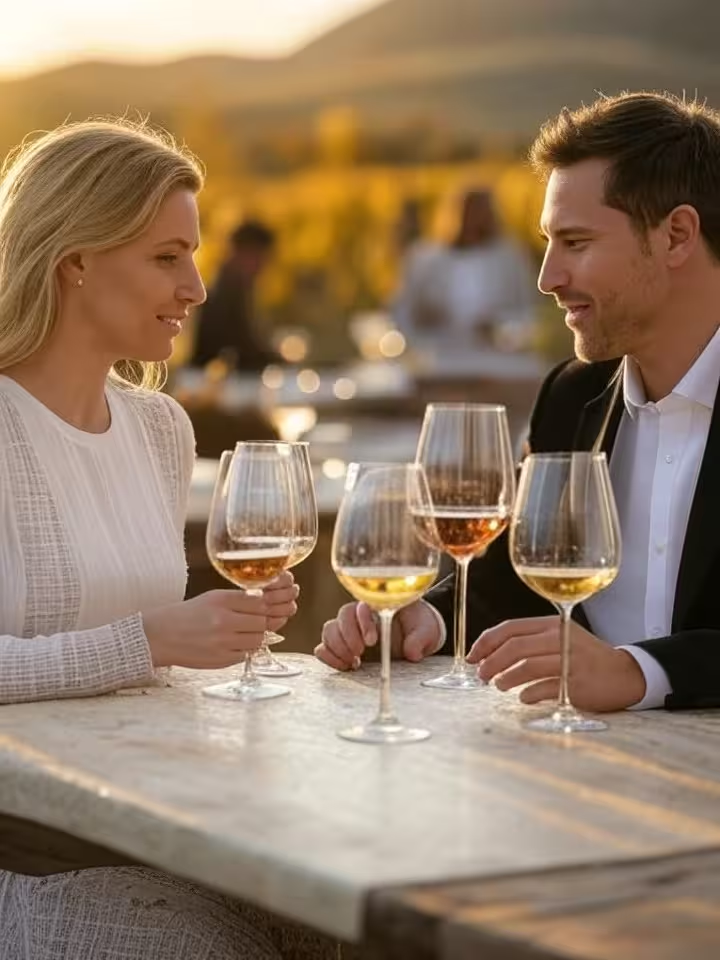
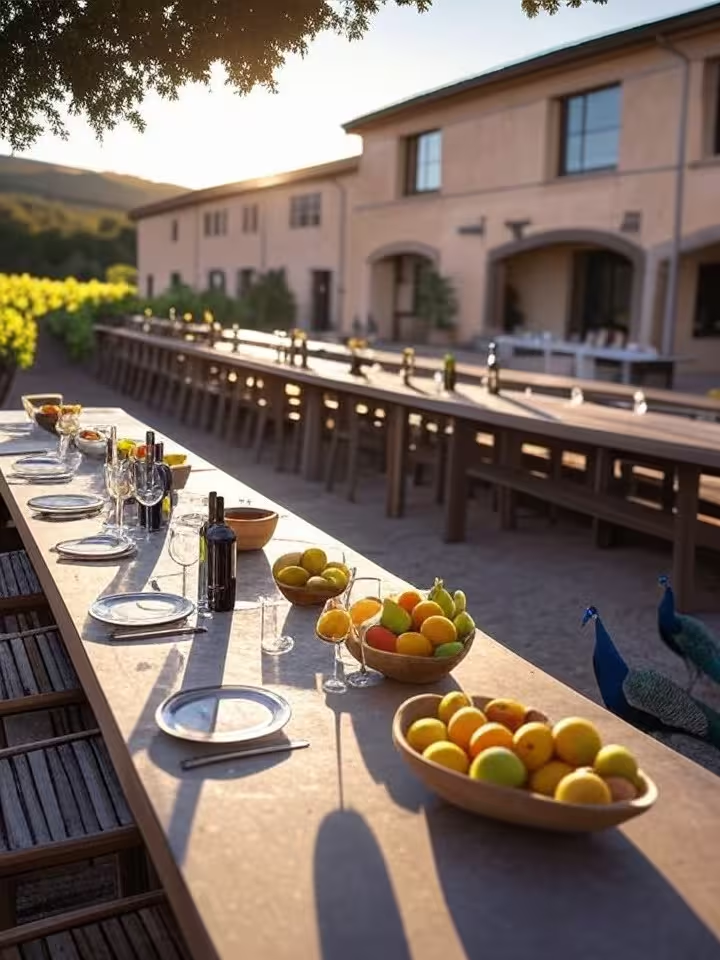
That’s what six years of sugar dating and at least a dozen Napa harvest trips have taught me. It’s not about the luxury—though that’s nice. It’s not about the Instagram moments—though those happen. It’s about whether you can sit across from someone at a vineyard table, glasses of cabernet in hand, and feel like you’re exactly where you’re supposed to be—for now, for this season, for whatever this is.
To provide the best experiences, we use technologies like cookies to store and/or access device information. Consenting to these technologies will allow us to process data such as browsing behavior or unique IDs on this site. Not consenting or withdrawing consent, may adversely affect certain features and functions.
Functional
Always active
The technical storage or access is strictly necessary for the legitimate purpose of enabling the use of a specific service explicitly requested by the subscriber or user, or for the sole purpose of carrying out the transmission of a communication over an electronic communications network.
Preferences
The technical storage or access is necessary for the legitimate purpose of storing preferences that are not requested by the subscriber or user.
Statistics
The technical storage or access that is used exclusively for statistical purposes.The technical storage or access that is used exclusively for anonymous statistical purposes. Without a subpoena, voluntary compliance on the part of your Internet Service Provider, or additional records from a third party, information stored or retrieved for this purpose alone cannot usually be used to identify you.
Marketing
The technical storage or access is required to create user profiles to send advertising, or to track the user on a website or across several websites for similar marketing purposes.