California Dreaming: How LA and SF Sugar Scenes Differ Completely (And What That Actually Means for Your Arrangement)
Victoria
April 19, 2026No comments
So here’s the thing about California sugar dating that nobody actually talks about—it’s not just different coasts. It’s different worlds.
I spent three years splitting my time between LA and San Francisco, and honestly? The whiplash was real. Like, we’re talking about the same state, same allowance ranges, same apps… but the energy? The expectations? What actually works on a first date? Completely opposite.
My first arrangement in LA started at Catch LA on a Thursday night—velvet ropes, paparazzi outside, my SD casually mentioning he’d just left a premiere. Two months later, I’m sitting in Blue Bottle Coffee in Hayes Valley with a tech executive who spent our entire meet-and-greet sketching out a startup idea on a napkin and asking what I thought about machine learning ethics.
Same me. Same profile. Completely different universes.
And look, if you’re trying to figure out which scene fits you better—or you’re already in one and feeling like something’s… off—this breakdown is going to save you months of confusion. Because what works in LA will actually hurt you in SF, and vice versa. I learned that the expensive way.
The Energy: Red Carpets vs. Hoodies (And Why It Actually Matters)
Los Angeles runs on visibility. Your arrangement isn’t just about what happens privately—it’s about where you’re seen, who notices, what gets posted. I’m not saying it’s shallow (okay, sometimes it’s shallow), but there’s this underlying current of… performance. In a good way, honestly, if you’re into that.
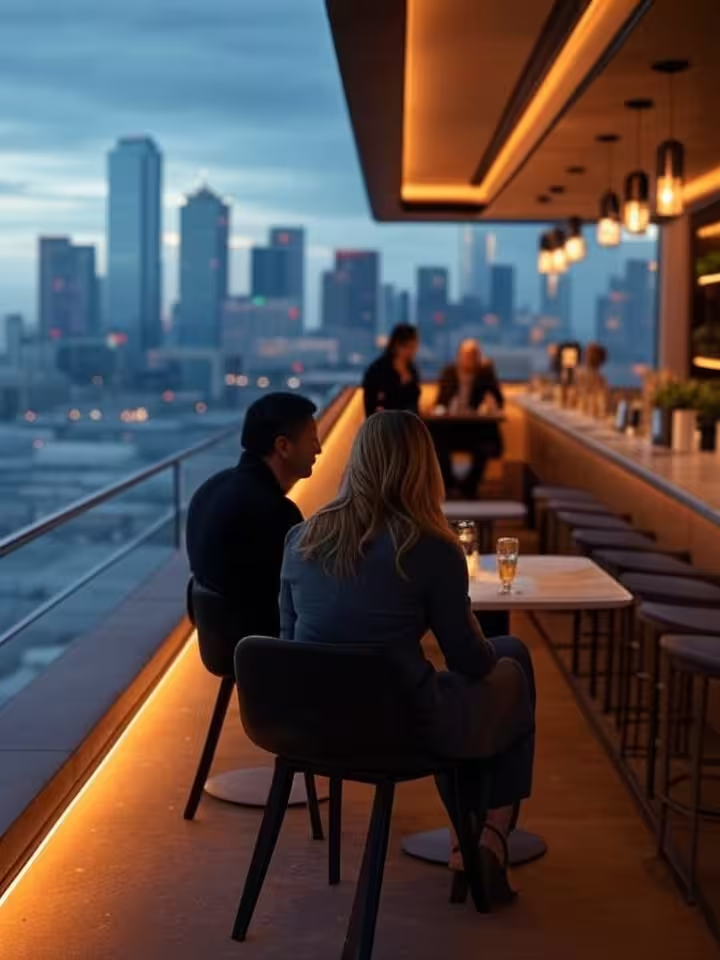
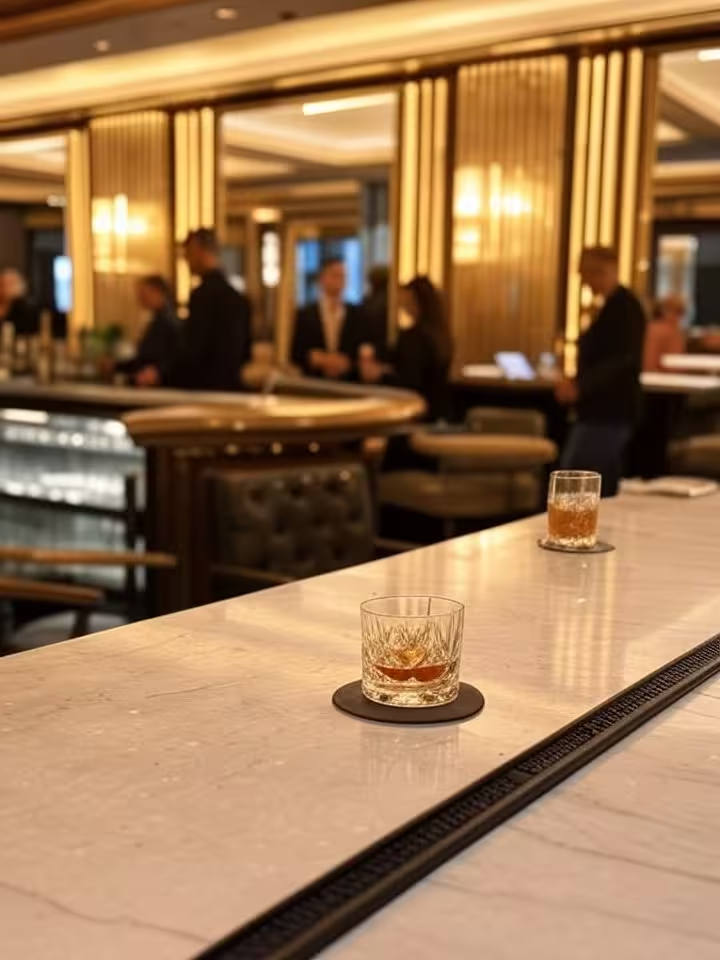
My LA arrangements always involved strategic venue selection. Catch, Olivetta, Mother Wolf—places where being photographed wasn’t a problem, it was kind of the point. One of my SDs literally kept a mental list of restaurants by “how impressive they looked on Instagram.” And before you judge, it worked for us. He got the social proof of dating someone who elevated his image, I got access to circles I’d never crack otherwise.
But here’s what I wish someone had told me: that performance energy requires constant maintenance. You’re always “on.” Hair perfect. Outfit dialed. Conversation sparkling. It’s exhilarating… and exhausting. I remember one night leaving Delilah at 1 AM, still in full glam, thinking “I literally cannot do this three times a week.”
San Francisco? Completely different fuel.
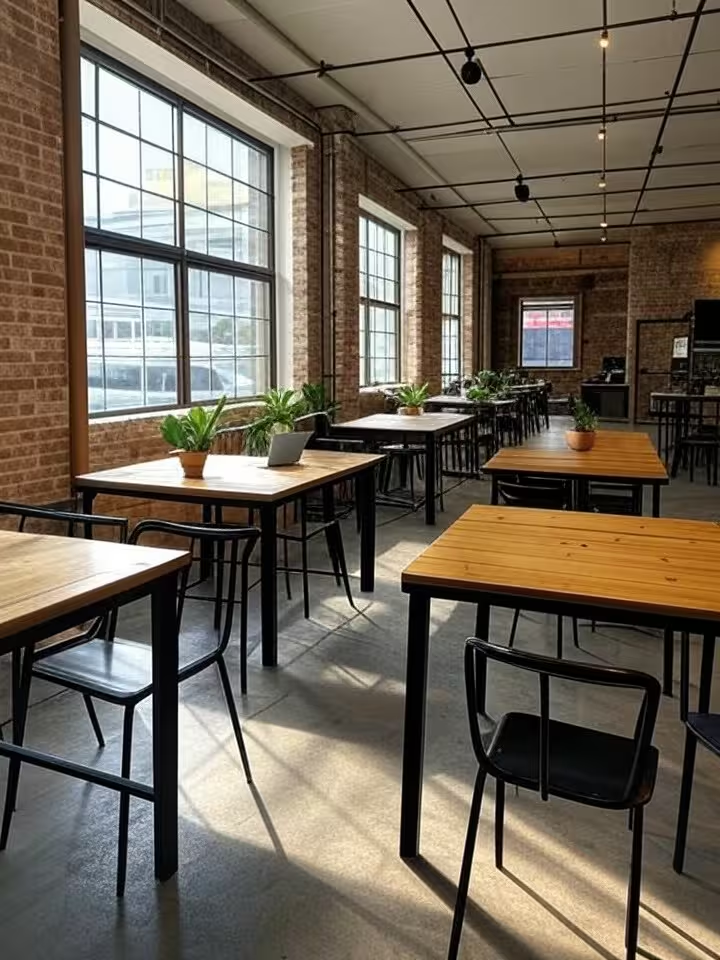
Innovation culture replaces entertainment culture. Your arrangement isn’t about being seen at the right table—it’s about having the right conversation. I once met an SD at Tartine in the Mission wearing a hoodie that probably cost $400 but looked like he’d slept in it. Spent two hours talking about behavioral psychology and barely touched our pastries.
The SF scene rewards depth over flash. According to Esther Perel’s research on modern relationships, environments that prioritize intellectual connection actually create stronger long-term bonds than those built primarily on social performance—and I saw this play out constantly between the two cities.
What nobody tells you: SF arrangements often blur into mentorship territory. My tech SDs wanted to discuss my career goals, introduce me to investors, review my LinkedIn. It felt less like sugar dating and more like… an unconventional accelerator program with benefits. Which sounds amazing, except when you realize you’re now essentially managing two careers—yours and the “you” you’re building with his guidance.
And honestly? Both approaches can be incredible. But trying to bring LA energy to SF—or SF depth to LA—will make you feel like you’re speaking different languages. Because you are.
What Actually Motivates Arrangements in Each City (Beyond the Obvious)
Let’s get real about what people are actually seeking in each scene. Because yeah, financial support exists in both—but the underlying drivers? Totally different.
In LA, arrangements often function as social currency. I’m talking about access, elevation, being part of scenes you couldn’t crack otherwise. My entertainment industry SD once brought me to a private screening at Soho House where I ended up sitting next to a casting director who later called me in for a project. That kind of adjacency has real value.
The men I dated in LA wanted companions who enhanced their lifestyle presentation. Not in a shallow way (okay, sometimes in a shallow way), but in the sense that they were already living at a certain level and wanted someone who fit that. Someone who could hold their own at a Beverly Hills gallery opening or weekend in Palm Springs.
But here’s the friction point everyone hits: when your worth gets too tied to appearances. I remember having a full meltdown before a date at Republique because I’d gained like five pounds and convinced myself he’d lose interest. Spoiler: he didn’t notice. But the pressure I’d internalized about maintaining a certain look? That was eating me alive.
The LA scene can make you feel like you’re constantly auditioning. And if you’re someone who thrives on that energy—the styling, the presentation, the carefully curated aesthetic—it’s intoxicating. But if you’re not? It’ll drain you fast. There’s wisdom in what Brené Brown says about authenticity versus performance—when your arrangement requires a persona rather than your actual self, you’re building something that can’t sustain.
San Francisco arrangements center on growth and intellectual compatibility. The men I dated there wanted to invest in me—not just financially, but in skills, connections, frameworks for thinking. One SD spent three months helping me understand cap tables and equity structures because he thought I should start my own company eventually.
The motivation isn’t about having a stunning companion at events (though physical attraction obviously matters). It’s about having someone interesting. Someone who asks good questions, challenges ideas, brings fresh perspective. I once had an SD tell me, verbatim: “I can hire beautiful women for events. What I can’t hire is someone who makes me think differently about problems I’ve been stuck on.”
Sounds amazing, right? It is. Until you realize you’re now performing intellectual labor on top of emotional labor. That SD who wanted to discuss my startup ideas? Also expected me to read the articles he sent, have opinions on his portfolio companies, attend networking events where I’d be “introduced around” as his protégée.
I’m not complaining—the growth was real. I learned more about venture capital, product development, and strategic thinking in six months than I could’ve in years of business school. But if you’re someone who wants to keep your arrangement and your career development separate? SF might feel like too much overlap.
The broader insight here: LA arrangements are often about enhancement; SF arrangements are often about transformation. Neither is better. But knowing which you actually want—versus which sounds impressive—will save you from arrangements that feel misaligned from day one.
Where Things Actually Go Wrong (From Someone Who’s Lived Both)
Okay, let’s talk about the friction points nobody mentions until you’re already drowning in them.
In LA, the biggest issue is when the performance becomes the relationship. I had an arrangement that looked perfect from the outside—designer gifts, weekend trips to Napa and Sonoma, dinners at places with six-month waitlists. But we never actually… talked. Like, really talked. About fears, insecurities, what we wanted from life beyond the next Instagram-worthy moment.
It ended when I realized I could describe his social circle in detail but couldn’t tell you what kept him up at night. The whole thing had become transactional in this weird, glossy way. Beautiful and empty.
What I learned: LA arrangements require intentional intimacy. You have to actively carve out space for real connection, because the default mode is surface-level sparkle. Some practical things that actually helped in later arrangements:
Creating “no-performance” time. Like, explicitly saying “this dinner is just us, no social media, no networking.” It sounds obvious, but in LA culture, you have to literally schedule authenticity.
Talking about the image pressure directly. One of my most successful LA SDs and I had a whole conversation about how exhausting it was to always be “on,” and we built in low-key beach walks or Malibu drives where we could just… exist. Without curation.
Defining what luxury actually means to you. I realized I didn’t actually care about Michelin stars—I wanted experiences that felt special, which could just as easily be a private picnic at Griffith Observatory as a $500 dinner at Providence. Communicating that shifted everything.
The LA scene also struggles with age and appearance anxiety in ways that feel uniquely intense. I was 28 dealing with comments about “how long I could keep this up” before I “aged out.” Which, Jesus. But it’s real. If you’re in an LA arrangement, address this openly—your insecurities and his. Because he’s probably got his own about relevance and visibility.
San Francisco’s biggest friction point? The work-life boundary dissolves. I had an SD who would text me about business ideas at 11 PM, then seem hurt when I didn’t respond immediately. The arrangement had morphed into this 24/7 consultancy where I was emotionally available, intellectually engaged, and romantic partner. It was too much.
The intensity of tech culture bleeds into everything. My SF arrangements often felt like they had quarterly reviews—”how’s this working, what should we optimize, what metrics matter.” Which can be healthy! But also… sometimes you just want to enjoy someone’s company without analyzing the ROI.
Things that actually helped:
Setting explicit boundaries around work talk. Like, “I love discussing your projects, but after 8 PM let’s focus on us.” Sounds basic, but tech guys genuinely don’t default to this—you have to name it.
Distinguishing mentorship from relationship. I started asking: “Are you sharing this because you want my perspective, or because you’re trying to teach me something?” The former is connection; the latter is work. Both are valuable, but they’re different energies.
Scheduling deliberately low-stakes time. Hikes in Marin, walks through Golden Gate Park, dinners at neighborhood spots like SPQR instead of always hitting Quince or Saison. Creating space for the relationship to just… breathe, without the pressure of optimization.
The broader insight: both cities struggle with different versions of transactionality. LA makes it about appearances; SF makes it about productivity. And in both cases, you have to actively fight for emotional authenticity and mutual vulnerability. It doesn’t happen accidentally—you build it through honest, sometimes uncomfortable conversations about what you actually need from each other.
How to Actually Thrive in Each Scene (Real Strategies That Worked)
Alright, so you know the differences, you understand the friction points—now what actually works?
If you’re navigating LA sugar dating:
Lean into the social aspect, but control the narrative. Yes, you’ll attend events and be seen at nice places. But you get to define what that means. I started choosing venues that I loved—The Ivy for brunch because I genuinely enjoyed it, not because it was the most scene-y option. Small shift, huge difference in how authentic everything felt.
Build in private anchors. For every public dinner, schedule something low-key. Sunset at El Matador Beach, hiking Runyon Canyon early morning, cooking at home. These became the moments where real connection happened, because we weren’t performing for anyone.
Address appearance pressure head-on. I literally said to one SD: “I need you to know I’m not always going to look like I stepped off a runway, and I need that to be okay.” He laughed and said he’d been wondering if I ever just… wore sweatpants. (I do. Constantly.) That conversation unlocked so much ease.
Connect your arrangement to actual goals. If you’re using LA access strategically—whether that’s industry connections, lifestyle elevation, or financial stability—name it. My most successful LA arrangement involved my SD actively helping me build my consulting business through introductions. It added substance beyond the surface.
And look, if you vibe with the LA energy—if you love the styling and the scenes and the curation—lean all the way in. Just make sure there’s substance underneath. Because arrangements built purely on aesthetics don’t survive the first bad day.
If you’re navigating San Francisco sugar dating:
Embrace the intellectual aspect, but guard your boundaries. Yes, your SD wants stimulating conversation and fresh perspective. But you’re not his employee or his mentee—you’re his partner. I started framing it as: “I love talking about this stuff, and I also need us to have time that’s just about connection, not productivity.”
Use the growth opportunity strategically. If your SF SD is offering career guidance or industry access, treat it like the valuable asset it is. But be clear about what you actually want help with. I made the mistake of letting an SD “fix” parts of my career I wasn’t asking for help with, and it created weird power dynamics.
Balance depth with lightness. SF arrangements can get heavy—big conversations, life philosophy, future planning. Build in moments of pure fun. Ferry Building tastings, Dolores Park hangs, comedy shows in the Mission. Remind each other you can enjoy life without analyzing it to death.
Define what “intellectual compatibility” actually means. I realized I didn’t need someone who wanted to debate philosophy at every meal—I needed someone who was curious and made me think differently. That’s a different bar, and it opened up arrangements with people outside traditional tech circles.
The SF scene rewards authenticity in ways LA sometimes doesn’t. You can show up as yourself—ambitions, uncertainties, weird interests and all—and find SDs who value that realness. But you have to actually show up that way. The performance here isn’t aesthetic; it’s intellectual honesty.
The Stuff Nobody Talks About: Culture Shock Between Cities
Okay, rapid-fire observations from someone who bounced between these scenes for three years:
Allowance conversations are completely different. In LA, there’s often this dance around it—implications, hints, gradual reveals. In SF? One of my tech SDs literally sent me a spreadsheet outlining his proposed arrangement terms. I’m not kidding. It included tabs.
The timeline varies wildly. LA arrangements often start fast—chemistry, excitement, let’s-see-where-this-goes energy. SF tends to involve more vetting, discussion of compatibility, almost like you’re pitching a partnership. Neither is wrong, but the pacing feels totally different.
How you meet differs. LA is still big on apps like Seeking, but there’s also significant crossover through social scenes—parties, events, mutual connections. SF leans heavier on apps and intentional platforms, probably because the tech crowd is more comfortable with digital-first connection.
What counts as a “successful” date isn’t the same. In LA, success might be: Did we get a good table? Did we have chemistry? Did anyone interesting see us? In SF, it’s more: Did we have a meaningful conversation? Did I learn something? Do I see long-term potential here? Very different metrics.
And honestly? The biggest culture shock is how each city views sugar dating itself. LA treats it as part of the entertainment ecosystem—not hidden, not scandalized, just… another facet of how people connect in a transaction-heavy culture. SF approaches it more analytically, almost anthropologically—examining the dynamics, the ethics, the optimization of mutual benefit. Same activity, completely different cultural framing.
If you’re considering relocating or splitting time between cities (which several of my SDs did), just know: your arrangement will probably need to shift. What worked in one place won’t automatically translate. I had to basically create different versions of my sugar dating approach for each city—not fake, but adapted. Like speaking different dialects of the same language.
Cross-City Comparisons: When Your SD Has Ties to Both
Here’s a situation I dealt with multiple times: SDs who split time between LA and SF for business. And let me tell you, navigating that created its own interesting dynamics.
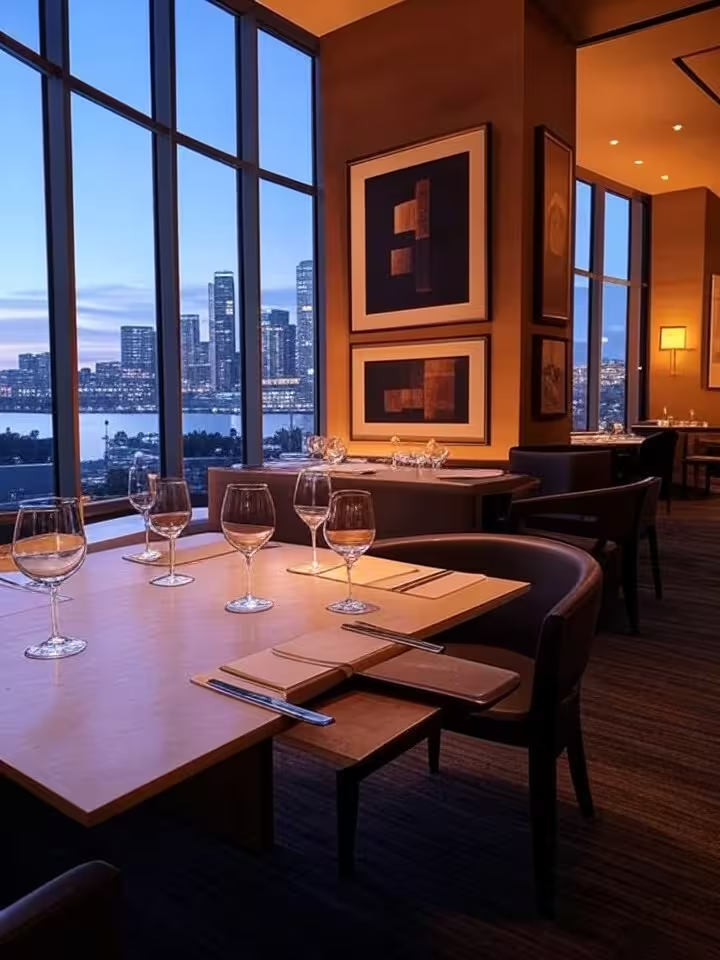
I had one arrangement with a venture capitalist based in SF but in LA almost weekly for portfolio company meetings. The shift in his energy between cities was fascinating. In SF, we’d meet at Atelier Crenn and discuss impact investing and systems thinking. In LA, suddenly we’re at Chateau Marmont and he’s introducing me to film producers.
What I learned: he was performing different versions of himself in each city. Not inauthentically—these were both real parts of who he was. But the environments pulled out different aspects. And I had to figure out how to be present for both without losing myself in the shifting dynamics.
The practical challenge: allowance and expectations get murky. Are we doing two separate arrangements based on geography? One fluid arrangement that adapts? Do LA weeks mean more public appearances and SF weeks mean more private time? We had to literally sit down and map it out, which felt awkward but saved us constant miscommunication.
If you’re in a similar situation, some things that helped:
Establish which city’s norms are your baseline. We decided SF would be our “default” arrangement structure, with LA weeks as variations rather than complete resets. Gave us an anchor.
Communicate about the switching. I’d say something like, “You seem different here than in SF—more extroverted, more social. That’s cool, I’m just adjusting.” Naming the shift made it less disorienting.
Decide how public you’re comfortable being. In SF, we could be relatively low-key. In LA, his social presence was bigger. We had to discuss what I was comfortable with in terms of visibility, because the stakes felt different.
The broader insight: California sugar dating isn’t monolithic. Even within these two major scenes, there’s huge variation based on industries, neighborhoods, individual preferences. Which is actually great—it means there’s space for whatever kind of arrangement actually works for you, as long as you’re intentional about finding and building it.
Final Thoughts: Choosing Your California Dream
Look, both scenes can be incredible. Both have taught me things I wouldn’t have learned otherwise. But they require different energies, different skills, different versions of vulnerability.
Choose LA if: You thrive on social energy, love the curation of experiences, enjoy being part of visible scenes, and want arrangements that feel like an elevation of lifestyle. If you’re someone who gains energy from being “on” and appreciates the aesthetics of connection as much as the connection itself. Just make sure you’re building real intimacy underneath the performance.
Choose SF if: You value intellectual stimulation, want arrangements that include growth and mentorship, prefer depth over flash, and are comfortable with the blurred lines between professional and personal development. If you’re someone who wants to be known—really known, for how you think and what you’re building—more than you want to be admired. Just protect your boundaries and make sure the relationship has space to be fun and light, not just productive.
Or—and this is what I eventually landed on—create your own hybrid. Take the best of both. LA taught me the value of aesthetic pleasure and social confidence. SF taught me to ask for intellectual depth and growth-oriented partnership. My most successful arrangements since have blended both: we go to beautiful places and have meaningful conversations. We maintain privacy and enjoy occasional visibility. We invest in my development and prioritize emotional connection.
The California sugar scene isn’t about picking a side—it’s about understanding what each offers and building arrangements that match who you actually are and what you genuinely need. Not what looks good on paper. Not what sounds impressive. What actually makes you feel fulfilled, supported, and excited about where things are going.
And honestly? That self-awareness—knowing what environment brings out your best self—is the real game-changer. Whether you’re drawn to Boston’s intellectual circles, Houston’s energy wealth, or trying to choose between these two California extremes, the arrangements that work are the ones where you show up authentically and ask for what you actually want.
So yeah—California dreaming is real. But the dream that matters is the one you’re intentionally building, not the one you think you’re supposed to want. Trust me on that one. It took me three years and way too many expensive mistakes to figure it out, but once I did? Everything clicked.
Now get out there and build something that actually fits. Both cities are waiting—and they’re wildly different adventures. Choose wisely. Or try both. Just know what you’re walking into.
To provide the best experiences, we use technologies like cookies to store and/or access device information. Consenting to these technologies will allow us to process data such as browsing behavior or unique IDs on this site. Not consenting or withdrawing consent, may adversely affect certain features and functions.
Functional
Always active
The technical storage or access is strictly necessary for the legitimate purpose of enabling the use of a specific service explicitly requested by the subscriber or user, or for the sole purpose of carrying out the transmission of a communication over an electronic communications network.
Preferences
The technical storage or access is necessary for the legitimate purpose of storing preferences that are not requested by the subscriber or user.
Statistics
The technical storage or access that is used exclusively for statistical purposes.The technical storage or access that is used exclusively for anonymous statistical purposes. Without a subpoena, voluntary compliance on the part of your Internet Service Provider, or additional records from a third party, information stored or retrieved for this purpose alone cannot usually be used to identify you.
Marketing
The technical storage or access is required to create user profiles to send advertising, or to track the user on a website or across several websites for similar marketing purposes.